Leadership for Business Owners: How to Build a Team That Runs Without You
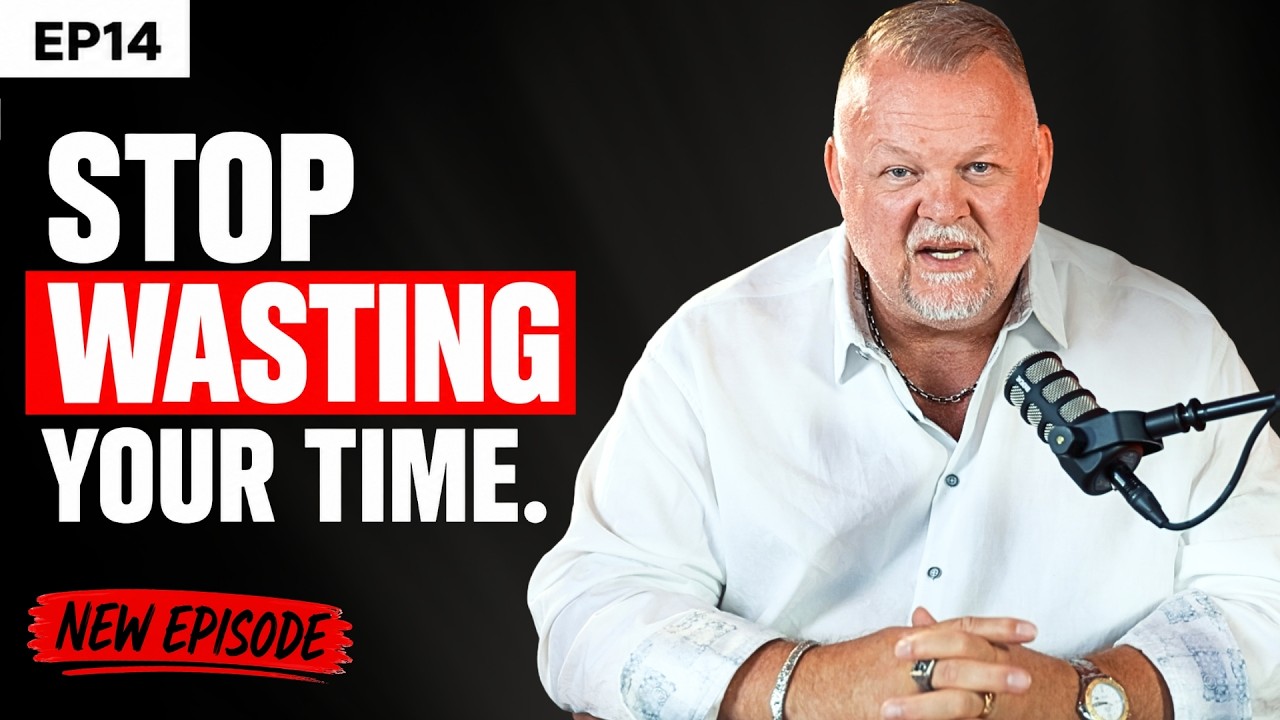
Most business owners get leadership completely wrong. They think it's about being liked, being respected, or being the smartest person in the room. Those things are nice. They're not the job. Leadership is about building people who operate at a high level whether you're in the room or not — people who own outcomes, hold standards, and make decisions without requiring your constant involvement.
I built Bartlett Roofing from zero to $50 million with 200 employees. None of that happened because I'm particularly talented. It happened because I figured out — slowly, through real mistakes — how to develop leaders inside the organization who cared as much about the outcome as I did. This guide covers what that actually took: the hiring decisions, the conversations, the accountability systems, and the culture that made it possible. Not theory. What we actually did.
Why Promoting Your Best Rep Is Usually the Wrong Move
The most predictable mistake in a growing business is this: you have a great salesperson, a great technician, a great operator. They're excellent at their job. So you promote them to run the team. And then you watch them struggle for six months while their former peers resent them and the operation loses the thing that made it great in the first place.
The skills that make someone exceptional as an individual contributor are almost the opposite of what makes someone effective as a leader. Individual contributors run on personal accountability — self-direction, urgency, the discipline to execute without external motivation. Leaders have to create that in other people. That's a fundamentally different skill set. Most people never develop it. Assuming it comes automatically with a title is one of the most expensive assumptions a business owner can make.
The right hire is about who someone actually is, not who you hope they'll become. That applies to leadership promotions just as much as external hires. Before you put someone in charge of others, you need to know how they handle conflict, how they give feedback, how they respond when someone on their team isn't performing. You learn that by watching people over time — not by assuming the best from a strong individual track record. Get to know your people before you put them in charge of other people.
The Two Things Every Leader Has to Get Right
Strip leadership down to its minimum viable requirements and you're left with two things: clarity and follow-through. You have to be clear about what you expect — specific, not inspirational. And you have to follow through on that clarity consistently — not when you feel like it, not when things are going well, every time.
Most leaders fail on follow-through. They set a standard in a team meeting, walk away feeling good about it, and then let it slide the first time it's not met. That one moment erases the standard. The team learns that the standard is aspirational, not real. And every subsequent standard you try to set is undermined by that precedent. Your team isn't watching your words. They're watching what you do when standards aren't met.
The conversation most leaders avoid is the one that actually builds the team. When something's wrong, naming it clearly and privately — without softening it into ambiguity — is the highest-leverage leadership action you can take. Not because it's comfortable. Because it tells the person across the table that you're serious about the standard, serious about their development, and serious enough about the relationship to say the hard thing instead of letting it fester. Leaders who avoid hard conversations don't protect people. They fail them.
How to Know Your People — The Deep Dive Framework
You cannot lead people you don't know. Not at the level that actually moves the needle. Surface-level check-ins tell you whether work is getting done. They don't tell you whether someone is checked in or checked out, whether they're quietly carrying something that's limiting their performance, whether they're in the right role, or whether they're thinking about leaving.
That knowledge only comes from real, intentional conversation — the kind that goes beyond status updates. A genuine deep dive with someone on your team covers their goals, their frustrations, what they feel like they're missing, where they want to be in three years, and whether they feel like the company is investing in their development. That conversation requires you to show up without an agenda other than understanding. If you can't operate without defensiveness and vulnerability, you'll never get past the surface. And if you never get past the surface, you're managing workers, not leading people.
The leaders who consistently get the most out of their teams aren't the toughest or the loudest. They're the ones people actually trust. That trust is built in the quiet moments — the one-on-one conversations where someone realizes their leader actually sees them, not just their output. That's the thing that creates real buy-in. Not incentive plans. Not recognition programs. The experience of being genuinely known by the people who lead you.
The Weekly One-on-One: Where Accountability Actually Lives
Accountability doesn't happen in all-hands meetings. It doesn't happen in performance reviews twice a year. It happens in a consistent, weekly conversation between a leader and a direct report — a conversation with structure, with follow-through, and with a record of what was said and what was agreed to.
Most leaders do one-on-ones wrong. They turn them into status updates — what did you work on this week, what are you working on next week, anything blocking you? That's a check-in. It's not a leadership conversation. A real one-on-one reviews the specific outcomes that were committed to last week, holds the line when commitments weren't met, and builds next week's commitments based on what the longer-term goals require. There's a clear difference between the two, and that difference is the difference between a team that's coordinated and a team that's actually developing.
Done right, the weekly one-on-one is where growth happens — not the annual review, not the off-site. The weekly cadence builds trust over time, creates a record of commitments and outcomes, and gives the leader real-time signal on whether someone is trending in the right direction. It also creates a culture where accountability is expected and normal, rather than something that only happens when things go wrong. Cancel one-on-ones inconsistently and you've told your team that their development isn't worth your calendar.
Company Culture Is a Business System, Not an HR Project
Culture is not a set of values on a wall. It is not the vibe at the holiday party. It is the actual standard of behavior that gets rewarded, tolerated, or corrected in your organization day to day. Whatever behaviors consistently go unchallenged become the culture, regardless of what your stated values say. This is not inspirational. It's operational.
The reason culture matters as a business system is that it scales or doesn't scale with you. A strong culture means new hires assimilate to the standard quickly because they see it modeled around them. A weak culture means every new hire is a potential dilution of whatever standards you've tried to maintain — and at 50 or 100 employees, you can't personally course-correct every deviation. The culture has to do that work for you. Culture is the operating system your team runs on when no one's watching.
Building it intentionally means starting with what you won't tolerate, not just what you aspire to. Define the behaviors that are non-negotiable — showing up prepared, owning outcomes, telling the truth even when it's uncomfortable — and then be ruthless about enforcing them regardless of who violates them. The moment you make an exception for a top performer, you've told your entire team that performance is a hall pass for character. It isn't. Letting that slide is how you build a culture you can't be proud of, one exception at a time.
The Standards That Scale — Non-Negotiables Every Team Needs
Every organization I've seen grow past a certain size has, at some point, defined what is non-negotiable. Not aspirational. Not preferred. The things where if someone violates them, there are no second chances — not because the leader is harsh, but because those things are load-bearing walls. Remove them and the structure collapses.
At Bartlett, those non-negotiables come down to honesty, ownership, and effort. You can be wrong. You can make mistakes. But you cannot lie, you cannot deflect, and you cannot coast. We made this explicit — and we've enforced it even when it was expensive. I've let people go who were performing well by the numbers because their character didn't hold up. That's not a hard call. That's protecting the team from the thing that kills teams from the inside.
Defining the standards that are truly non-negotiable creates clarity that benefits everyone in the organization. People want to know what the real rules are. They want to know whether the standards apply equally or whether it depends on who you are. When you enforce the non-negotiables consistently — especially when it's hard, especially for high performers — you tell your team that the standards are real. That's the foundation of a team people actually want to be part of.
How to Have Hard Conversations Without Losing Good People
The fear that stops most leaders from having direct conversations is the fear of damaging a good relationship. So they wait. They hint. They give vague feedback that the other person doesn't even register as feedback. And the problem grows while the relationship quietly corrodes anyway — because the person who needed the feedback never got the chance to fix what was wrong.
Hard conversations, done well, build relationships. They don't damage them. The moment someone realizes you cared enough about them and the team to say the uncomfortable thing directly — without cruelty, without delay, without a hidden agenda — they understand they're working with someone who's serious. That's not a threat. That's respect.
The mechanics are simple: be specific, be private, be timely. Name exactly what the issue is. Don't let it sit for weeks until a small problem becomes a large one. Give the person a clear picture of what needs to change and by when. Then hold the line at the follow-up. The leaders who avoid these conversations don't protect the people they're trying to protect. They fail them — and eventually they fail the team around them, too.
Leading by Example — The Standard Your Team Is Actually Watching
Everything you do as a leader is visible. The energy you bring on Monday morning. How you respond when a deal falls apart. Whether you're prepared for your own meetings. Whether you hold yourself to the same standard you hold everyone else to. Your team is watching all of it, all the time — and drawing conclusions about what's actually acceptable in this organization.
You cannot ask your team to be disciplined if you aren't disciplined. You cannot ask for ownership if you're making excuses. You cannot build a culture of accountability if you're not the most accountable person in the building. The ceiling of your company's culture is your own ceiling. Not the ceiling of your best people. Yours. That's not a motivational concept. It's a structural reality.
The standard you set through your own behavior is the baseline your team will operate from. Great teams don't happen because the leader found the right people. They happen because the leader showed the right people what right looks like, every day, until it became normal. That's what leading by example actually means — not occasional displays of effort or discipline, but a consistent standard your team can set their watch to. When that's in place, culture stops being a project. It becomes the environment everyone operates in.
Go Deeper: Posts in This Series
- How to Hire for Small Business Growth (Stop Hiring for Potential)
- The Deep Dive One-on-One: How to Actually Know Your People
- The Weekly One-on-One: Your Most Underused Leadership Tool
- The Hard Conversation Most Leaders Avoid (And Why That's Killing Your Team)
- Leading by Example: The One Leadership Standard That Never Fails
- Why Culture Is Your Biggest Competitive Advantage
- The 6 Non-Negotiables: The Standards Every High-Performance Team Shares
Hear What Real Leadership Looks Like
Every episode of Monster Mindset goes deep on what it actually takes to build and lead a team that performs — real operators, real decisions, real numbers. No theory from a stage.
Listen to the Podcast